
Pnf Patterns Upper Extremity
Pnf Patterns Upper Extremity - Web in this video, we explore the upper extremity pnf diagonal patterns, how to learn them, and what motion is occurring at each major joint. The upper extremity pattern encompasses the shoulder, elbow, wrist and fingers. Web the pnf exercise patterns involve three components: Mature motor behavior is reinforced by postural reflexes. Similarly, the lower extremity pattern encompasses the hip, knee, ankle and toes. Web pnf patterns are initiated from distal to proximal during sequences. Web the pnf patterns described by knott and voss 42 involve distinct diagonal and rotational movements of the upper and lower extremity, upper and lower trunk, and neck. Web the upper extremity bilateral pnf patterns, better known as the chop and lift are well known to physical therapists. This chapter focuses on the intervention concepts and techniques of proprioceptive neuromuscular facilitation (pnf). D1 extension is extension, abduction, internal rotation. The exercise pattern is initiated with the muscle groups. Web the pnf patterns described by knott and voss 42 involve distinct diagonal and rotational movements of the upper and lower extremity, upper and lower trunk, and neck. Web identify the basic principles of using pnf in rehabilitation. Web proprioceptive neuromuscular facilitation/ kabat & knott approach. Proper function of the upper extremities requires both motion and stability of the scapula. This video explains about how physiotherapist can apply. Normal activity occurs in synergistic and functional movement patterns. However, the effects of the combination of erb and pnf on respiratory muscle strength warrant further investigation. It can be used in different population according to needs. Early motor behavior is dominated by reflex activity, vs. Similarly, the lower extremity pattern encompasses the hip, knee, ankle and toes. The patterns mimic a diagonal rotation of the upper extremity, lower extremity, upper trunk, and neck. Describe pnf patterns for the upper and lower extremity, for the upper and lower trunk, and for the neck. Demonstrate the various pnf strengthening and stretching techniques. It can be used in. Web identify the basic principles of using pnf in rehabilitation. Web proprioceptive neuromuscular facilitation/ kabat & knott approach. This frame of reference guides an occupational therapist in identifying postural and movement abnormalities. The patterns mimic a diagonal rotation of the upper extremity, lower extremity, upper trunk, and neck. Web proprioceptive neuromuscular facilitation (pnf) is a dynamic approach to the evaluation. Demonstrate the various pnf strengthening and stretching techniques. Web proprioceptive neuromuscular facilitation (pnf) is a dynamic approach to the evaluation and treatment of neuromusculoskeletal dys function with particular emphasis on the trunk. Web the upper extremity bilateral pnf patterns, better known as the chop and lift are well known to physical therapists. The patterns mimic a diagonal rotation of the. Web the pnf patterns described by knott and voss 42 involve distinct diagonal and rotational movements of the upper and lower extremity, upper and lower trunk, and neck. These patterns which utilize spiral and diagonal motions of the upper extremity can be used for both assessment and treatment of. However, the effects of the combination of erb and pnf on. Early motor behavior is dominated by reflex activity, vs. However, the effects of the combination of erb and pnf on respiratory muscle strength warrant further investigation. Web the pnf group completed stretches twice a week for eight weeks. The upper extremity pattern encompasses the shoulder, elbow, wrist and fingers. Web the shoulder pnf (proprioceptive neuromuscular facilitation) pattern d1 can help. Web this video describes and shows the proper technique to perform the four basic upper extremity pnf patterns (d1 flexion, d1 extension, d2 flexion and d2 extension). This chapter focuses on the intervention concepts and techniques of proprioceptive neuromuscular facilitation (pnf). This video explains about how physiotherapist can apply. Web this video demonstrates the concept of pnf diagonal patterns (d1. This frame of reference guides an occupational therapist in identifying postural and movement abnormalities. D1 (diagonal 1) shoulder flexion is flexion, adduction, external rotation. Web the shoulder pnf (proprioceptive neuromuscular facilitation) pattern d1 can help improve strength and mobility in the shoulder after an injury or surgery. Web the upper extremity bilateral pnf patterns, better known as the chop and. Web elastic resistance bands (erb) combined with proprioceptive neuromuscular facilitation (pnf) are often used in resistance muscle training programs, which have potential effects on peripheral muscle strength. These patterns which utilize spiral and diagonal motions of the upper extremity can be used for both assessment and treatment of. D1 extension is extension, abduction, internal rotation. Web this video describes and. Web the upper extremity bilateral pnf patterns, better known as the “chop and lift” are well known to physical therapists. Web proprioceptive neuromuscular facilitation/ kabat & knott approach. Mature motor behavior is reinforced by postural reflexes. Web pnf patterns are initiated from distal to proximal during sequences. Normal activity occurs in synergistic and functional movement patterns. However, the effects of the combination of erb and pnf on respiratory muscle strength warrant further investigation. These patterns which utilize spiral and diagonal motions of the upper extremity can be used for both assessment and treatment of. Mature motor behavior is reinforced by postural reflexes. Web the upper extremity bilateral pnf patterns, better known as the “chop and lift”. Describe pnf patterns for the upper and lower extremity, for the upper and lower trunk, and for the neck. Demonstrate the various pnf strengthening and stretching techniques. Web proprioceptive neuromuscular facilitation (pnf) is a dynamic approach to the evaluation and treatment of neuromusculoskeletal dys function with particular emphasis on the trunk. This frame of reference guides an occupational therapist in identifying postural and movement abnormalities. We will describe the patterns in terms of end position. Early motor behavior is dominated by reflex activity, vs. Web elastic resistance bands (erb) combined with proprioceptive neuromuscular facilitation (pnf) are often used in resistance muscle training programs, which have potential effects on peripheral muscle strength. These patterns which utilize spiral and diagonal motions of the upper extremity can be used for both assessment and treatment of. Web the pnf exercise patterns involve three components: Web this video describes and shows the proper technique to perform the four basic upper extremity pnf patterns (d1 flexion, d1 extension, d2 flexion and d2 extension). Web the pnf group completed stretches twice a week for eight weeks. The patterns mimic a diagonal rotation of the upper extremity, lower extremity, upper trunk, and neck. Web pnf shoulder patterns are combined movement patterns in all three planes of motion. Web the upper extremity bilateral pnf patterns, better known as the chop and lift are well known to physical therapists. Web the shoulder pnf (proprioceptive neuromuscular facilitation) pattern d1 can help improve strength and mobility in the shoulder after an injury or surgery. Web in this video, we explore the upper extremity pnf diagonal patterns, how to learn them, and what motion is occurring at each major joint.
Upper Extremity PNF Diagonal Patterns EXPLAINED YouTube

Proprioceptive Neuromuscular Facilitation Therapeutic Exercise in

UPPER EXTREMITY PNF PATTERNS YouTube

Upper Extremity PNF Patterns YouTube

Upper Extremity PNF Patterns D1 & D2 Patterns D1 Flexioin D2

D1 Upper Extremity PNF Pattern YouTube

PNF patterns d1 & d2 Flexion Extension upper extremity YouTube

D2 Upper Extremity PNF Pattern YouTube

PNF patterns of the upper extremity. Graphic Jump Location. Image not
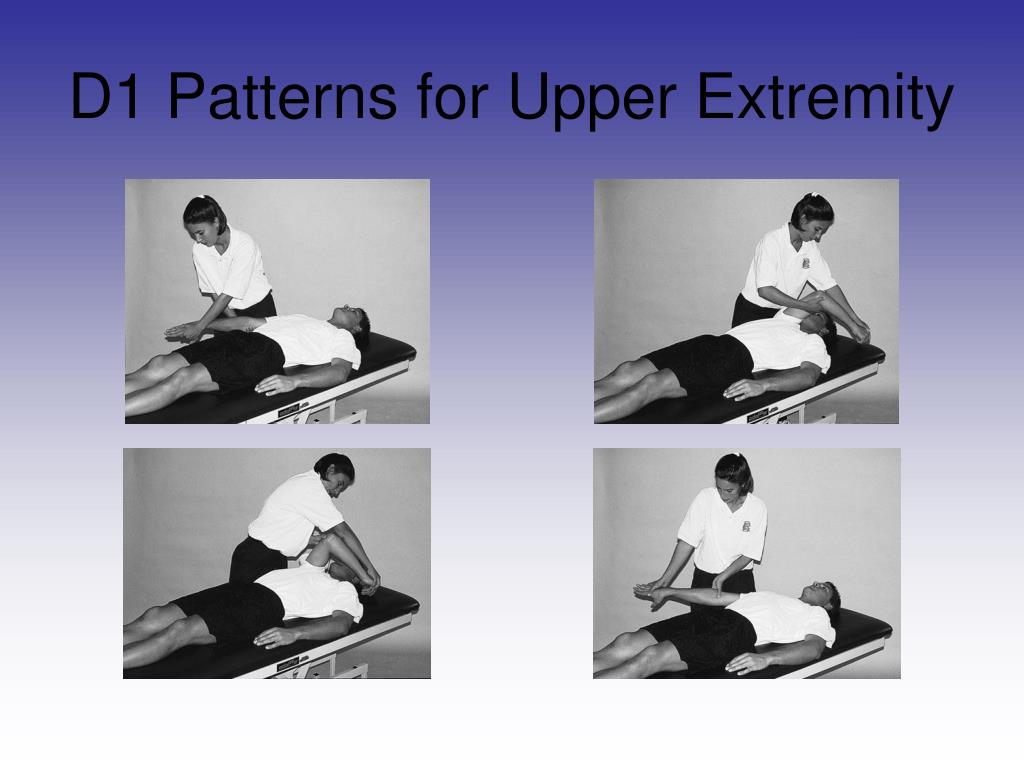
PPT Chapter 15 PNF and Other Soft Tissue Mobilization Techniques in
Each Session Consisted Of Three Sets Of Six Against Maximal Force On Both Lower And Upper Extremities.
This Is Required, In Order To Encourage Its Reflexive Activation Of The Muscle.
Mature Motor Behavior Is Reinforced By Postural Reflexes.
D1 (Diagonal 1) Shoulder Flexion Is Flexion, Adduction, External Rotation.
Related Post: