
Diamond Top Pattern
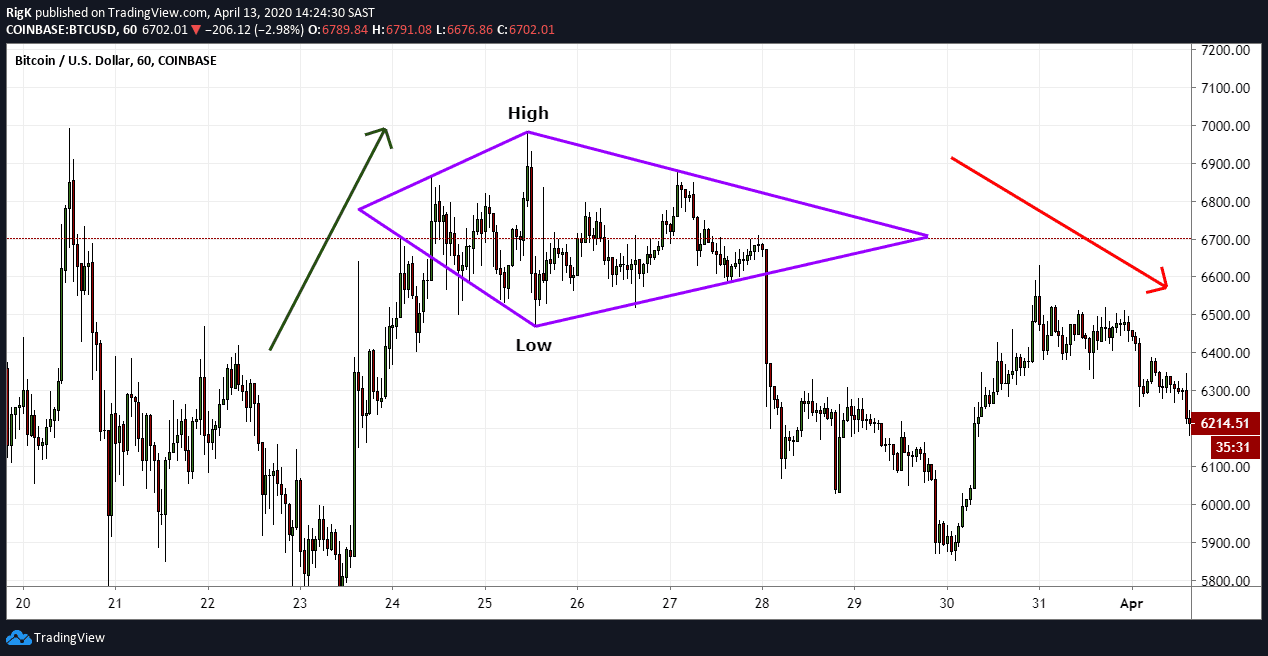
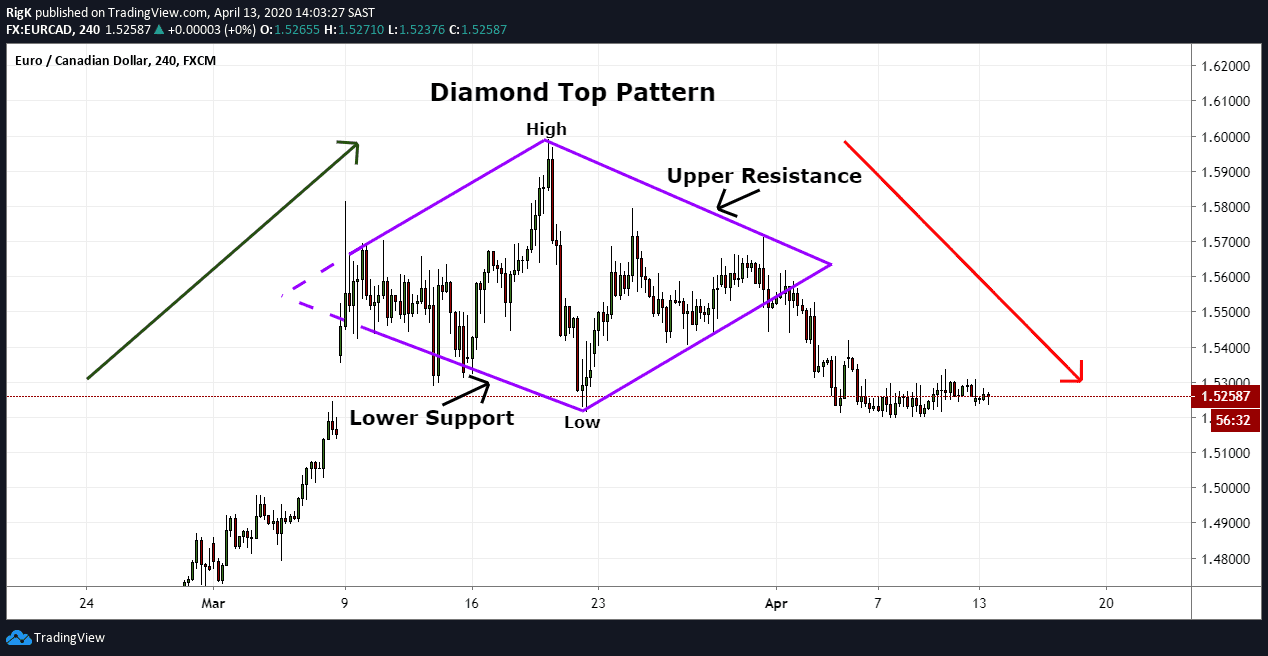
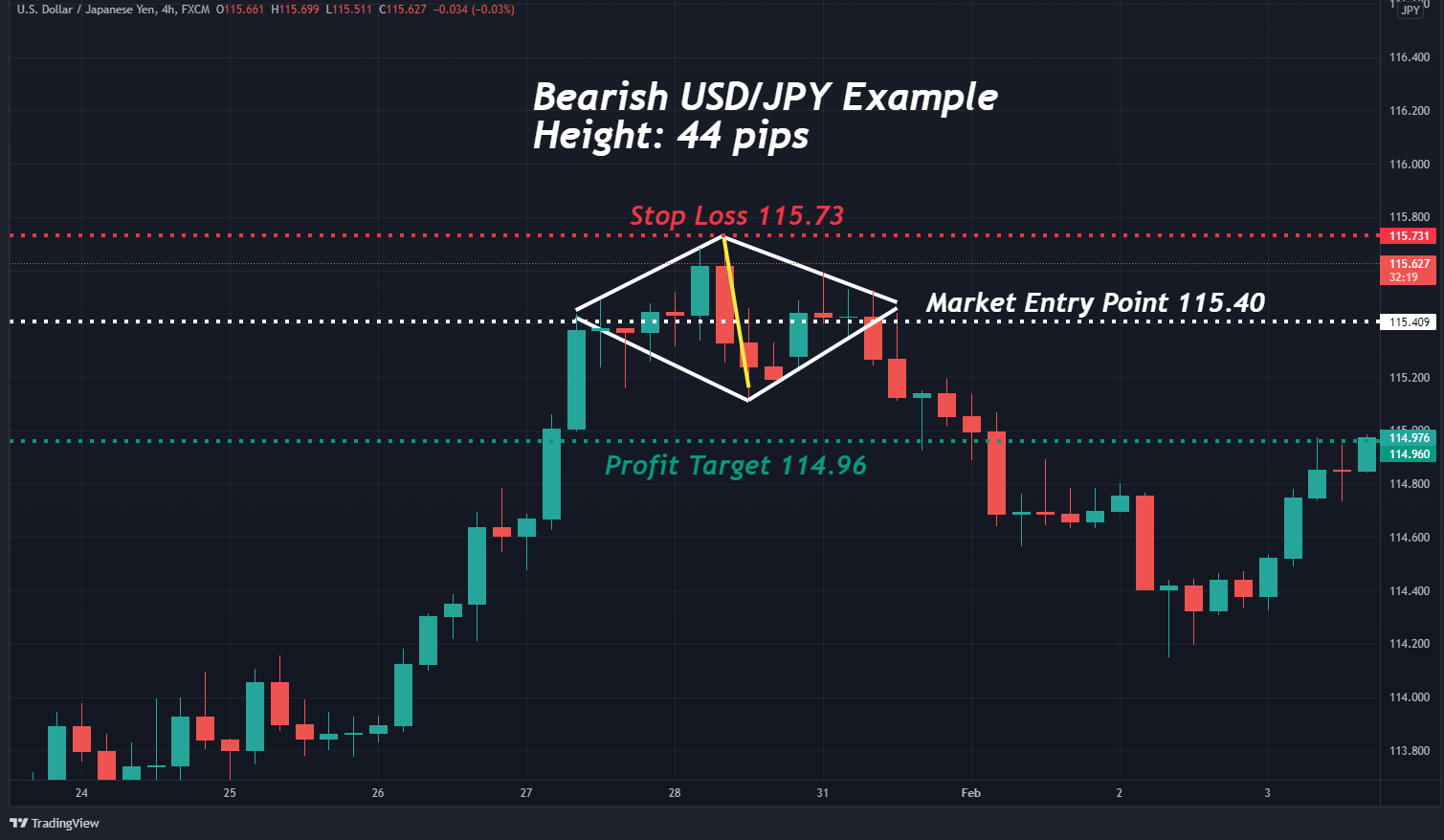
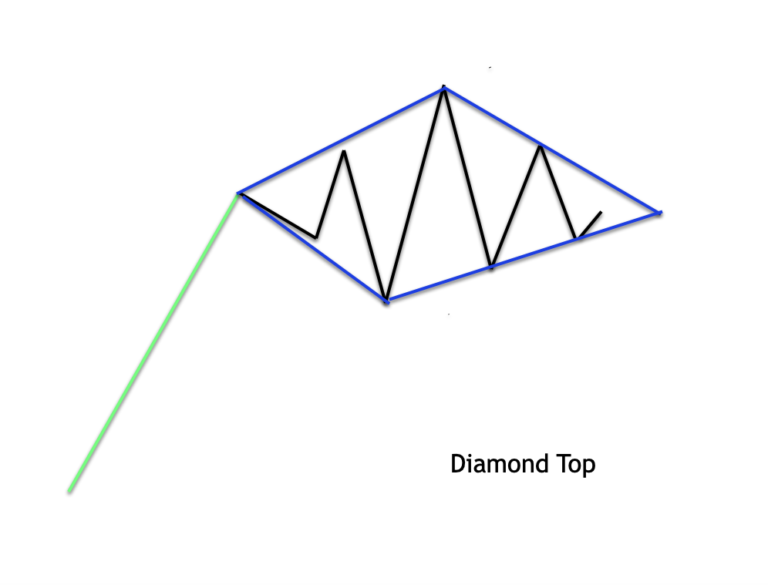
Diamond Top Pattern - These patterns form on a chart at or near the peaks or valleys of a move, their sharp reversals forming the shape of a diamond. Web the diamond pattern is a reversal indicator that signals the end of a bullish or bearish trend. Web while a rounded top is fairly intuitive, the diamond pattern merits a definition. Web first, a diamond top pattern happens when the asset price is in a bullish trend. This pattern marks the exhaustion of. Like diamonds bottoms, the top variety (with downward breakouts) can show a fast decline post breakout if a quick rise preceded the diamond reversal. A diamond top has to be preceded by a bullish trend. The diamond pattern is not seen as often as. This shape has two parts: A diamond pattern is formed on the left side by a series of higher highs and lower lows and, once past the midpoint, a series of lower highs and higher lows. Initially, there's a phase where prices swing more widely, and after that comes a phase where these swings become less until they're quite narrow. Web the diamond top pattern is a bearish reversal pattern, while the diamond bottom pattern is a bullish reversal pattern, providing powerful signals. This pattern marks the exhaustion of. Web the diamond pattern is a rare, but reliable chart pattern. Web a diamond pattern is a chart pattern used in technical analysis by traders to identify price reversals. This pattern typically develops after an extended uptrend and is suggestive of buyers losing control, creating potential opportunity for selling assets. Second, the price will form what seems like a broadening wedge pattern. However bullish diamond pattern or diamond bottom is used to detect a reversal following a downtrend. Web a diamond top pattern is a technical analysis pattern that is preceded by a strong uptrend. It is so named because the trendlines. 4/5 (51 reviews) This particular pattern indicates a potential trend reversal, with a previous uptrend likely to turn into a downtrend. The bullish diamond pattern and the bearish diamond pattern. Web first, a diamond top pattern happens when the asset price is in a bullish trend. Web the diamond pattern is a rare, but reliable chart pattern. It creates a series of higher highs and lower lows, and then lower highs and higher lows on a price chart. Diamond reversal patterns are seen across all different types of financial markets including the stock market, forex market, crypto market, and futures markets. The first half of the diamond chart pattern is the symmetrical broadening wedge, which is a. Web a diamond top is a technical chart pattern that occurs when a security’s price forms a shape resembling a diamond. It creates a series of higher highs and lower lows, and then lower highs and higher lows on a price chart. This article will explore the diamond chart patterns and how they are formed. This pattern marks the exhaustion. 4/5 (51 reviews) Like diamonds bottoms, the top variety (with downward breakouts) can show a fast decline post breakout if a quick rise preceded the diamond reversal. It is characterized by increasing volatility and oscillations, with the price forming a narrowing range of higher highs and lower lows. This shape has two parts: It indicates a period of market consolidation. Web a diamond top formation is a technical analysis pattern that often occurs at, or near, market tops and can signal a reversal of an uptrend. The diamond pattern is not seen as often as. Web a diamond pattern in forex trading is a relatively rare technical analysis formation that sometimes appears on exchange rate charts. Web the diamond pattern. A diamond top formation is indicative of a potential change in the prevailing trend from bullish to bearish. The diamond pattern has a reversal characteristic: This pattern typically develops after an extended uptrend and is suggestive of buyers losing control, creating potential opportunity for selling assets. Diamond reversal patterns are seen across all different types of financial markets including the. Diamond reversal patterns are seen across all different types of financial markets including the stock market, forex market, crypto market, and futures markets. Web the diamond top pattern is a bearish reversal pattern, while the diamond bottom pattern is a bullish reversal pattern, providing powerful signals. Web what is a diamond top formation? Web a diamond top is a technical. This particular pattern indicates a potential trend reversal, with a previous uptrend likely to turn into a downtrend. It looks like a rhombus on the chart. Web statistics updated on 8/26/2020. It creates a series of higher highs and lower lows, and then lower highs and higher lows on a price chart. Web first, a diamond top pattern happens when. However, it could easily be mistaken for a head and shoulders pattern. Bullish diamond pattern (diamond bottom) bearish diamond pattern (diamond top) Web first, a diamond top pattern happens when the asset price is in a bullish trend. There are 2 types of diamond patterns which are the diamond top pattern and the diamond bottom pattern with diamond tops being. Web while a rounded top is fairly intuitive, the diamond pattern merits a definition. Web what is a diamond top formation? $ $ $ diamond tops with upward breakouts in a bull market rank last for performance. Web the diamond pattern is a rare, but reliable chart pattern. A diamond top formation is indicative of a potential change in the. Web here are the rules for trading the diamond top chart pattern: Web the diamond top pattern happens when prices first have a wide range and then get smaller at the top of an upward trend. The diamond pattern has a reversal characteristic: Web a bullish diamond pattern is often referred to as a diamond bottom, while a bearish diamond pattern is often referred to as a diamond top. The diamond top formation should be clearly defined with four trendlines that connect and. It is so named because the trendlines. However, it could easily be mistaken for a head and shoulders pattern. A bottom one, on the other hand, happens when the asset’s price is moving in a bearish trend. However bullish diamond pattern or diamond bottom is used to detect a reversal following a downtrend. Diamond reversal patterns are seen across all different types of financial markets including the stock market, forex market, crypto market, and futures markets. It is most commonly found at the top of uptrends but may also form near the bottom of bearish trends. These patterns form on a chart at or near the peaks or valleys of a move, their sharp reversals forming the shape of a diamond. Web diamond pattern trading is the strategy traders use to trade these rare trend reversal patterns. This shape has two parts: This article will explore the diamond chart patterns and how they are formed. A diamond top formation is indicative of a potential change in the prevailing trend from bullish to bearish.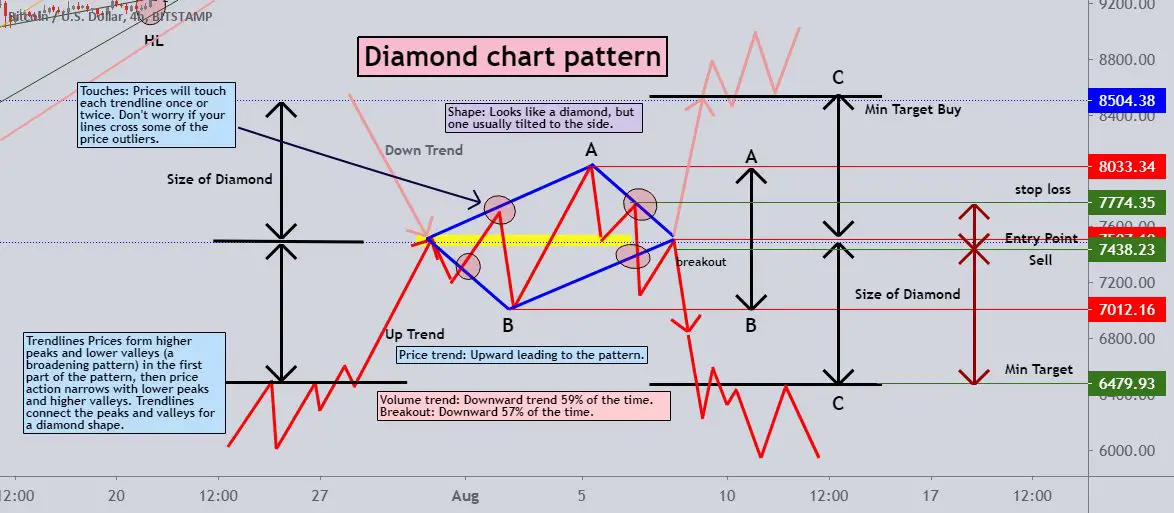
Diamond Top Chart Pattern
Diamond Top Pattern Explained With Examples
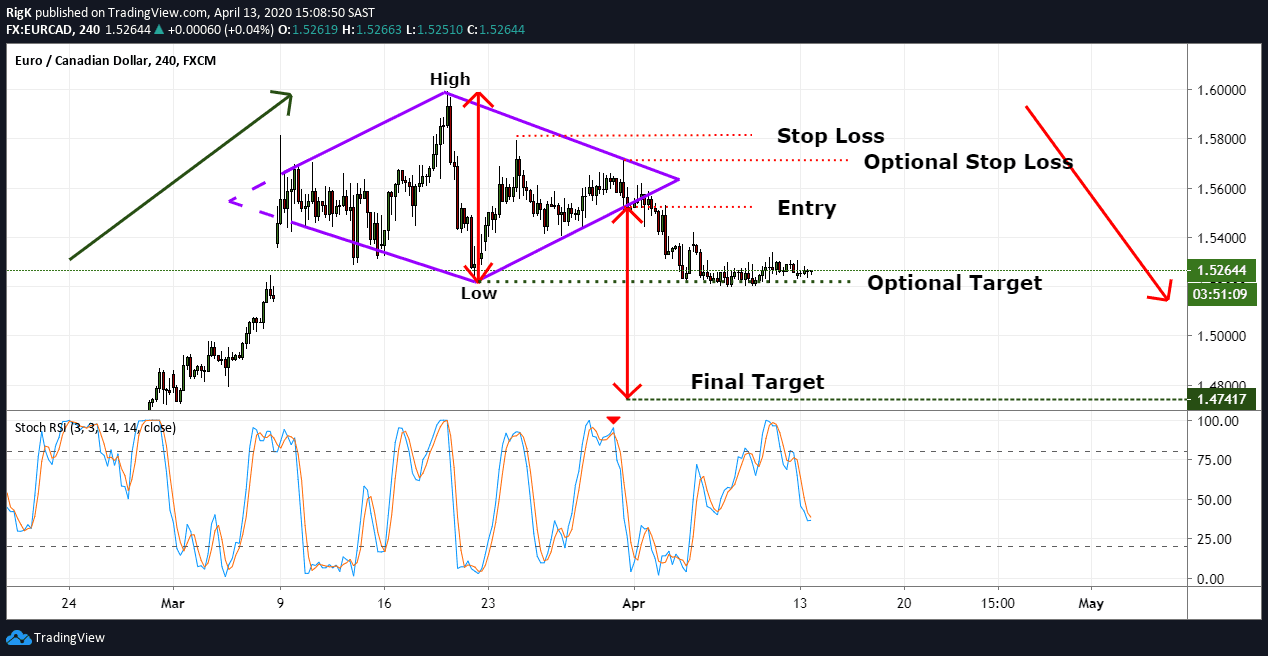
Diamond Top Pattern Definition & Examples (2024 Update)
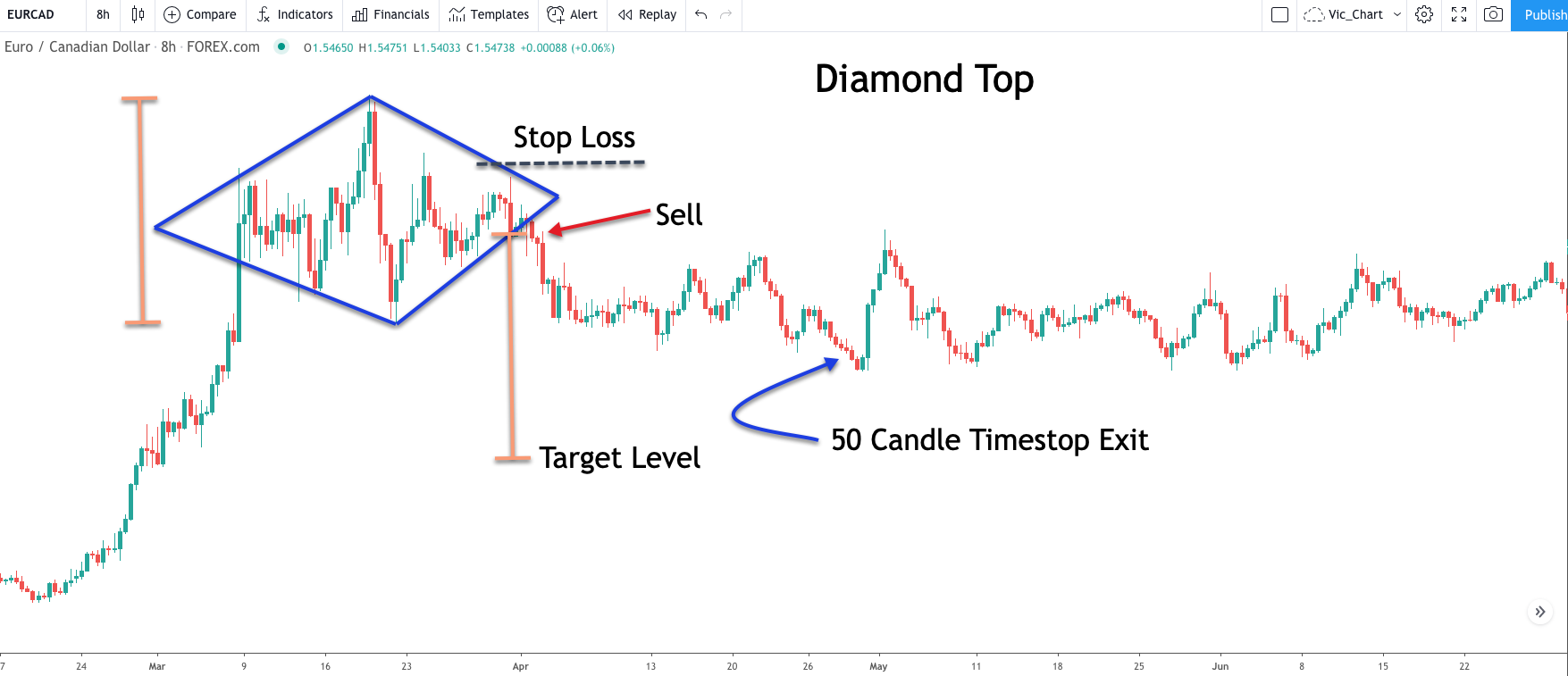
Diamond Chart Pattern Explained Forex Training Group
Diamond Top Pattern Definition & Examples (2024 Update)

Diamond Top Chart Pattern Stock chart patterns, Trading charts, Forex
What Are Chart Patterns? (Explained)
How to Trade the Diamond Chart Pattern (In 3 Easy Steps)
Diamond Chart Pattern Explained Forex Training Group

Diamond Top Crochet Pattern Free to download 🧵 CROCHET PATTERNS
Web A Diamond Top Is A Bearish, Trend Reversal, Chart Pattern.
A Clear Uptrend Must Be In Place Before The Diamond Top Formation.
This Leads To Two Distinct Diamond Patterns:
In This Article, We'll Explain.
Related Post: